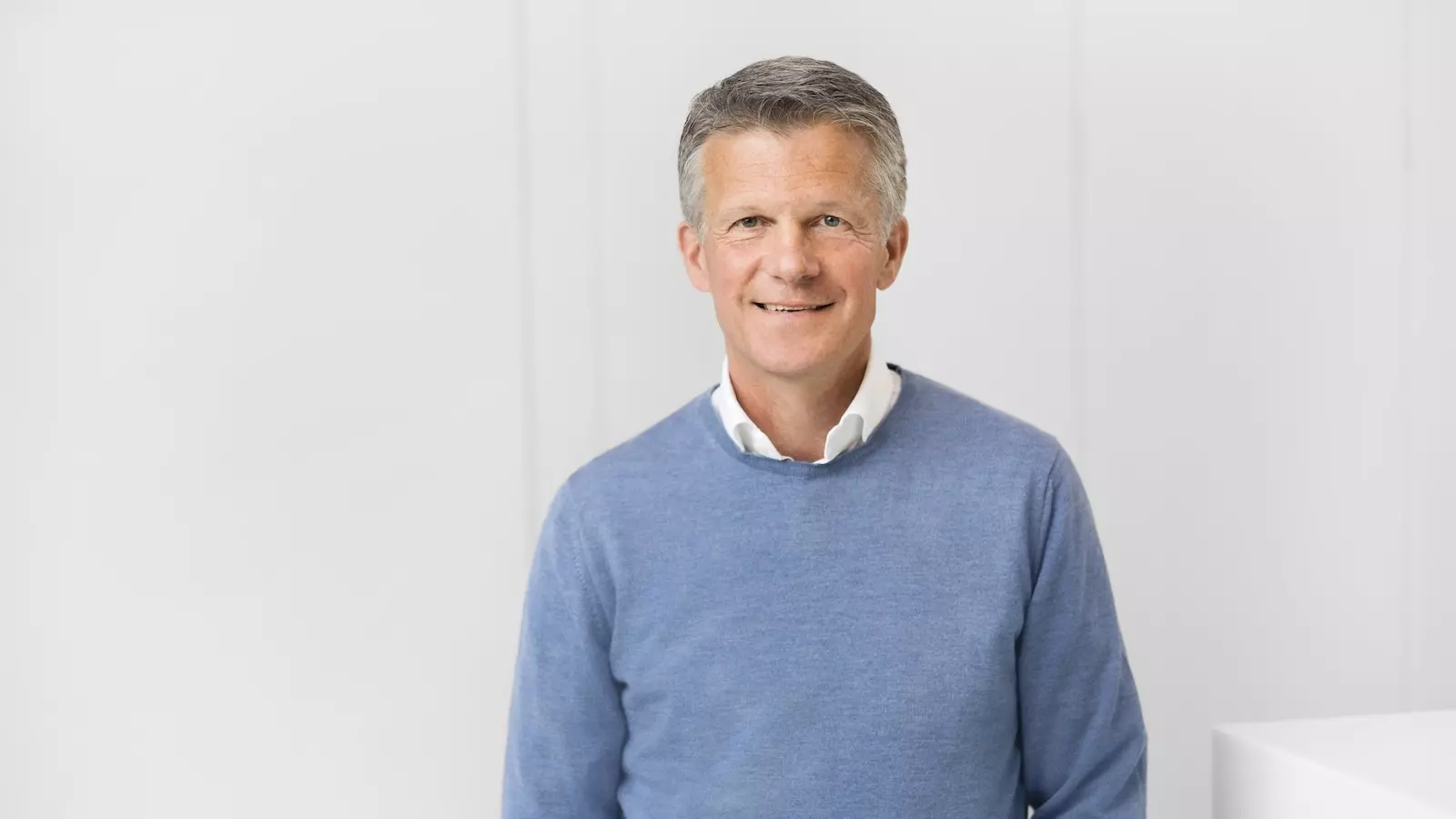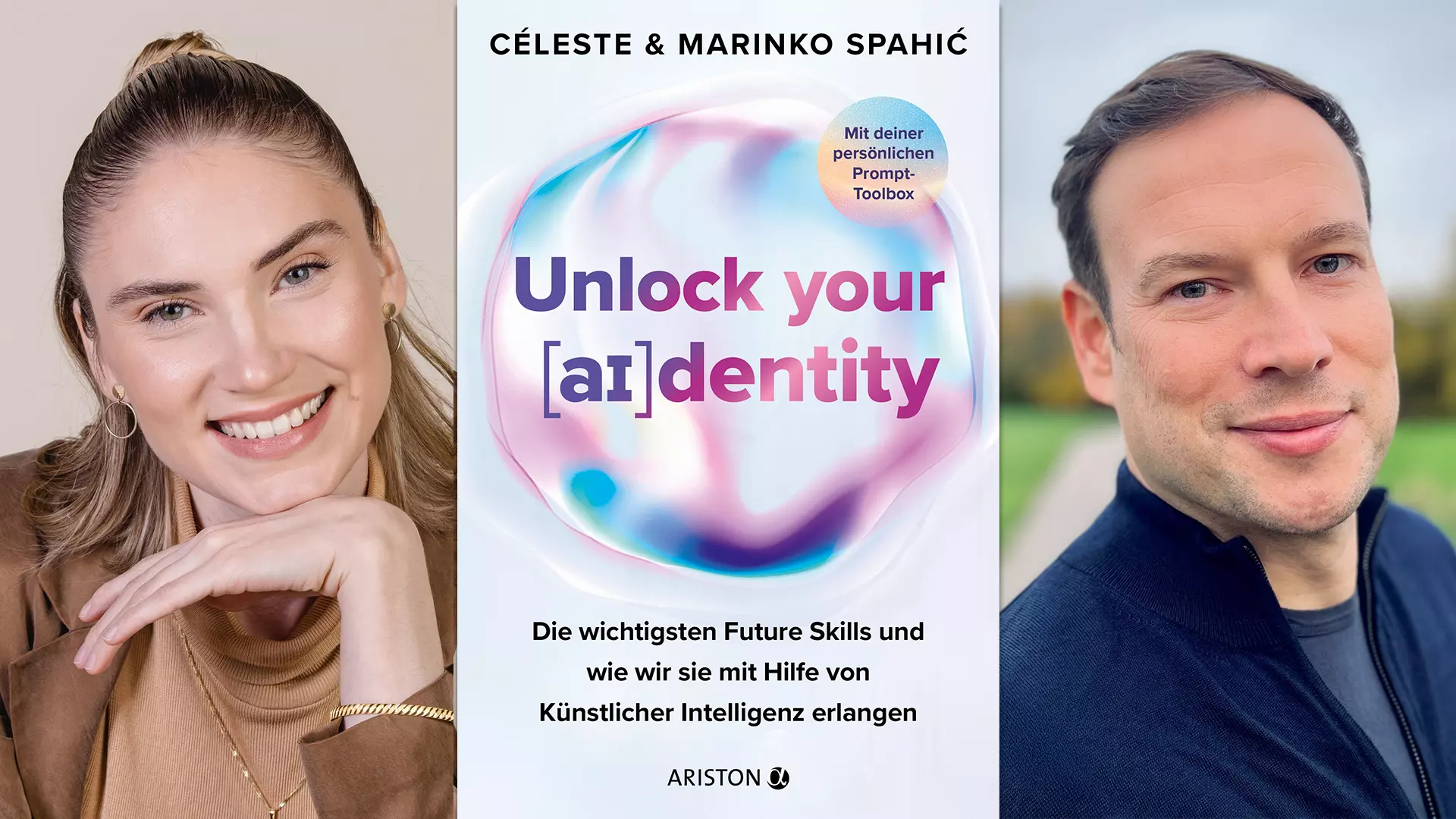
Artificial intelligence (AI) is changing not only the technologies we use and our work processes, but also the way we learn, make decisions, and collaborate. As a result, questions that extend far beyond the technical application of AI are becoming increasingly important: How can people stay mentally healthy in an increasingly digital workplace? And what skills help them navigate these changes? We spoke about these topics during a meeting of health management experts from various Bertelsmann divisions in Germany with Penguin Random House author and tech philosopher Céleste Spahić and Anna Carlotta Böhmer, Health & Well-being Manager in Bertelsmann’s Corporate Responsibility department. In her book “Unlock your [aɪ]dentity,” co-authored with her husband Marinko Spahić, and published by Ariston, part of Penguin Random House, in March, Céleste Spahić explores how people can preserve and further develop their identity, mental strength, and capacity to act in a world shaped by AI.
Céleste, your book is titled “Unlock your [aɪ]dentity.” What exactly do you mean by that?
Céleste Spahić: The title has a double meaning: “Unlock” means both “to decode” and “to unleash.” That is how our book is structured as well. The first part is about decoding how digital technologies influence the way we think, feel, and act. In the second part, we show how people can use AI mindfully to strengthen and develop their own skills. The phonetic spelling “[aɪ]” deliberately stands for two meanings: “Artificial Intelligence” and the English word “I.” This fusion of the self and AI within the word “identity” is the central thesis of our book: Today, our identities are no longer formed in isolation, but through constant interaction with technology. Social media algorithms shape what we see and what we believe about ourselves. AI is changing how we write, make decisions, and feel. That is not new – humans have always been shaped by their tools. What is new is the nature of this change: For the first time, machines speak our language, and language is the source code of our consciousness. That gives these systems a power we do not yet fully understand. The crucial question is: Does this shaping happen unconsciously, or do we actively shape it ourselves?
Anna, what should a company introducing AI pay particular attention to when it comes to its employees?
Anna Carlotta Böhmer: In this context, a company should pay particular attention to actively involving employees in the change process, providing guidance and equipping them to work with AI. AI offers enormous opportunities: It can make work easier, enable new forms of collaboration, and create space for innovation. At the same time, new technologies are evolving rapidly, requiring employees to continuously adapt to new processes, tools, and ways of working.
What does that mean in practice?
Anna Carlotta Böhmer: It means that it is essential not only to offer technical training, but also to strengthen mental health and systematically build future skills like resilience, agility, a willingness to learn, and technological fluency. These skills give employees the confidence and self-assurance to actively shape change and harness the potential of AI in positive ways. Exchange, networking, and shared learning all play an important role. At Bertelsmann, the Bertelsmann Collaboration Platform, or BCP for short, provides a valuable opportunity for this. It creates space for cross-divisional collaboration, knowledge sharing, and inspiration. Employees can discover projects, use cases, articles, and events, ask experts questions, share experiences, and connect with colleagues across the company.
What skills do employees need not only to use AI efficiently, but also to use it deliberately to further develop their own thinking and creativity?
Céleste Spahić: The first step is to become aware of how strongly the digital technologies we use every day – both at work and in our private lives – already influence the way we think and act. No previous technology has ever had such direct access to our perception, our decisions, and our self-image. This awareness is the key to breaking free of that cycle of influence and actively shape it ourselves instead. That is why our book defines seven “future skills” that are essential.
What are they?
Céleste Spahić: They are intellectual autonomy, critical thinking, emotional intelligence, creativity, the ability to learn, resilience, and regeneration. These are skills that can deteriorate through uncritical use of AI but, when used correctly, can be deliberately strengthened with the help of AI. That is why each chapter not only explains why these skills are especially important right now, but also includes a prompt toolbox with practical prompts designed to help strengthen exactly these abilities in everyday life. In this way, AI becomes more than just an efficiency tool – it becomes a personal sparring partner for individual development. This is also where our “[aɪ]fluencer” methodology comes in: It turns this principle into a structured program for companies.
Digital transformation is changing not only the way we work, but also the demands placed on employees. What can help employees stay focused and healthy in a fast-paced digital world?
Anna Carlotta Böhmer: In an increasingly digital workplace, employees can do a great deal to strengthen their own health and stay focused. A mindful approach to AI begins with setting clear priorities and scheduling regular periods for focused work. Breaks and time for recovery are equally important for maintaining mental and physical energy. AI helps me plan my week and set clearer priorities. That is not just about work-related topics, but also about making time for balance, recovery, and small sources of energy in everyday life. Talking to colleagues and being open about questions and uncertainties also helps people find direction and reduce stress. When experiences and solutions are shared, it strengthens team spirit and encourages mutual support. This creates trust, giving employees the confidence to try new things and continue learning. All of these are essential prerequisites for remaining mentally healthy and productive over the long term, even in a dynamic environment.