Reinhard Mohn – Entrepreneur, Leader, Visionary
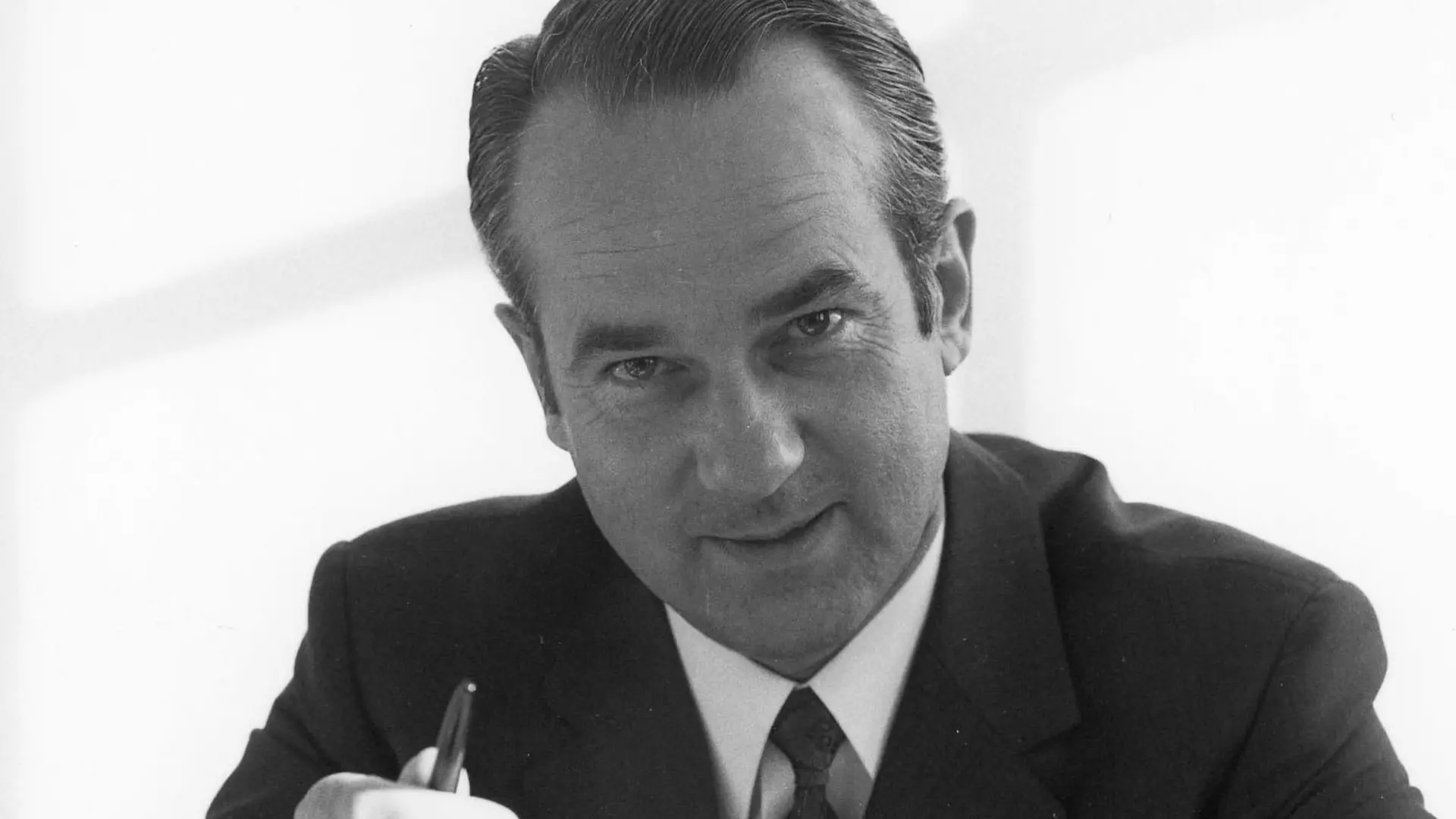
Early influences: Childhood, Youth, Wartime as a Soldier, POW Years
The Bertelsmann family, rooted in Gütersloh in eastern Westphalia, was shaped by the spirit of the pastor’s household, which in turn was strongly influenced by the Minden-Ravensberger Erweckungsbewegung. The C. Bertelsmann publishing house, founded in 1835, served as the publishing home of this religious revival movement, whose religious principles were anchored in a profound popular piety. The following generations of publishers stayed committed to this movement until well into the 20th century.
Reinhard Mohn, a great-grandson of the company’s founder Carl Bertelsmann, was born on June 29, 1921 as the fifth of six children and third-oldest son. After graduating from the Evangelisch-Stiftisches-Gymnasium in Gütersloh, a secondary school that Carl Bertelsmann had helped to found, he was drafted into the Reich Labor Service; in October 1939, he volunteered for the Wehrmacht. As a participant in the “West campaign,” he was deployed in Belgium, the Netherlands and France, among other places.
In May 1943, Mohn was taken prisoner of war in North Africa and spent two years in the Concordia POW camp in Kansas, USA. It was a time that would leave a lasting impression on him and had a considerable influence on his entrepreneurial leadership style. Throughout his life, Reinhard Mohn was guided by American management practices.
Rebuilding Bertelsmann – An Entrepreneur in the Time of the Economic Miracle
Reinhard Mohn was a mover and shaker. He was a lifelong learner, a self-taught entrepreneur who often acted on the principle of trial and error. But he was also a pioneering thinker without self-imposed limitations. The founding of the “Lesering” reading club was followed by swift entrepreneurial decisions that ultimately turned Bertelsmann into one of Europe’s largest media and education companies: the “Lesering” was followed by the “Schallplattenring” record club; the expansion of the publishing business was followed just a few years later by Bertelsmann’s entry into the magazine business. Initial investments into the television business in the 1960s paved the way for the company’s entry into commercial broadcasting. The Bertelsmann Lexikon encyclopedia shattered all existing sales records.
This rapid growth called for a modern entrepreneurial approach to the business. “People are at the center of the company,” was written in the company’s first Code of Conduct (1960), developed by Reinhard Mohn himself. Treating employees as partners was not an expression of a political program for Mohn. It was part of an entrepreneurial culture that he himself developed and nurtured.
Reinhard Mohn blurred the boundaries between benevolent humanist and calculating businessman. As he saw it, employees’ identification with Bertelsmann and performance for Bertelsmann would lead to a fair, performance-related income and a share in the company’s success.
Reinhard Mohn managed things from the background. He gave managers freedom to act and he empowered them to supplement and complement their own skills. He never believed in one-man shows. Unlike his father, he was not a patriarch. Through the principle of delegation, he relieved the burden on top management, encouraged creativity, and managed the transition to a large corporation. In so doing, he paved the way for a new kind of corporate culture: Leadership and responsibility are crucial to an organization’s success; personal attitude and professional competence provide legitimacy for executive authority.
Early Internationalization
Reinhard Mohn thought and acted internationally. He was a cosmopolitan with deep roots in his homeland, which he always acknowledged and embraced, where he felt at home, and which gave him room for reflection. He traveled the world early on, to the U.S., Japan, and even in what was then the USSR to seek inspiration for building his business.
The international Lesering concept was very successful in Spain, France and the Netherlands, and even beyond this, there were many more attempts to export the successful German club model that brought books directly to the people. Mohn knew no boundaries, neither geographical nor intellectual.
The Lesering spawned other businesses, and as early as the 1960s, Bertelsmann began investing internationally – in publishing houses, in printing plants, and in services.
The Philanthropist
Reinhard Mohn was an independent spirit, a pioneer and reformer, at times a visionary and missionary. He wasn’t influenced by mainstream opinions, but formed his own, well-founded judgment. He refused to be politically or intellectually biased. His political and business convictions were free of ideology. They were shaped by personal experiences that would make him an advocate of democratic values.
This attitude was expressed in the founding of the Bertelsmann Stiftung (1977) foundation, which marked the culmination of Reinhard Mohn’s life’s work. Here, his democratically based values, as well as his great structural and analytical skills, found their institutional counterpart – without partisan politics and for the greater good of society: “The Bertelsmann Stiftung foundation is a place where we look to the future without party-political boundaries, and develop impulses for change” is how its founder put it, and his words still hold true today.
After Reinhard Mohn's death, the Reinhard Mohn Foundation, which he had set up himself, started its work for East Westphalia.