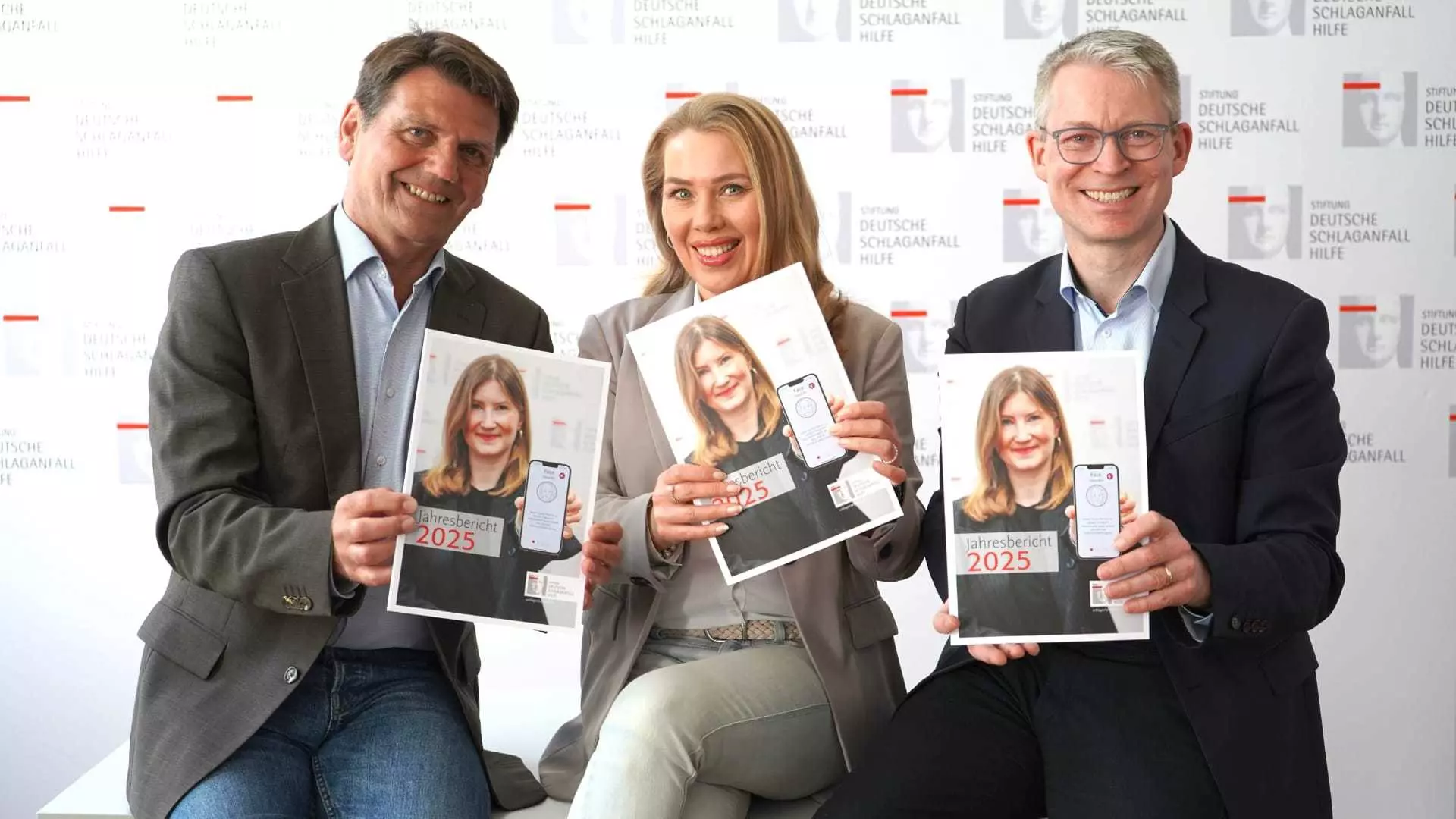
In 2025, 1.6 million people sought advice on the website of the German Stroke Foundation. On Wednesday, the foundation, which was founded by Liz Mohn in 1993, presented its annual report – and its ambitious goals for 2026.
Increasing number of survivors
According to the foundation, acute stroke care in Germany is of the highest standard. When Liz Mohn established the German Stroke Foundation in 1993, specialized stroke care did not exist in Germany. By the end of 2025, the foundation together with the German Stroke Society, certified a total of 356 stroke units. This is a unique success story: according to the German Stroke Foundation, nearly twice as many people survive a stroke today as did 30 years ago.
The foundation has significantly expanded its activities, particularly in the area of stroke aftercare. Through its grant program, it supports self-help groups across Germany. It has trained more than 900 volunteer stroke support workers. A special grant program enables sports clubs to establish rehabilitation sports groups for stroke survivors. Furthermore, 33 medical supply companies in Germany have already joined its “Qualified consultation on post-stroke support devices” program and are having their employees trained there.
“Patient Guide” flagship project
The foundation is setting a new benchmark with its “Patient Guide” flagship project The pilot project “Lex Lotsen OWL”, which has received approximately €7 million in funding from the federal government’s Innovation Fund, is currently testing various ways to integrate patient guides into the healthcare system in East Westphalia-Lippe (OWL). According to the German Stroke Foundation, it is the only patient guide project in Germany designed to address a wide range of diagnoses. In addition to stroke patients, it also takes care of heart patients. In this way, the foundation aims to demonstrate that its patient guide model is applicable to all complex, chronic conditions, irrespective of the underlying disease. The ultimate goal remains the introduction of patient guides into standard care.
For Liz Mohn, providing care for children who have suffered a stroke is a most heartfelt concern. The generous support from “Stiftung RTL – Wir helfen Kindern” amounting to €818,000 enables a large-scale information campaign this year to better educate affected families and healthcare professionals. This includes a number of videos featuring inspiring stories and expert interviews, informational brochures, and a community platform for sharing experiences.
Increase of reach
In 2026, the foundation also plans to relaunch its website in order to reach even more people affected in the future. Most recently, 1.6 million people visited the website per year. The upcoming relaunch aims to make the site more accessible and significantly more user-friendly through an AI-powered search function.
According to the German Stroke Foundation, many patients still arrive at hospitals too late to receive effective treatment. More than 100,000 people have downloaded the foundation’s free “FAST-Test” app, which enables laypeople to check for signs of a suspected stroke. In 2026, the app will be expanded into the “BE-FAST” text; in addition to paralyses and speech difficulties, this test also takes into account balance and vision problems.
Focus on invisible consequences and family members
This year, two major awareness days will address issues that are largely overlooked by the public. On nationwide “Stroke Awareness Day” on May 10, the focus will be on the invisible, neuropsychological consequences of stroke under the motto “I feel what you can’t see”. 80 percent of patients are affected by these consequences, according to the foundation. And on World Stroke Day on October 29, the focus will be on family members, highlighting the findings from the first nationwide survey of family members conducted by the German Stroke Foundation.