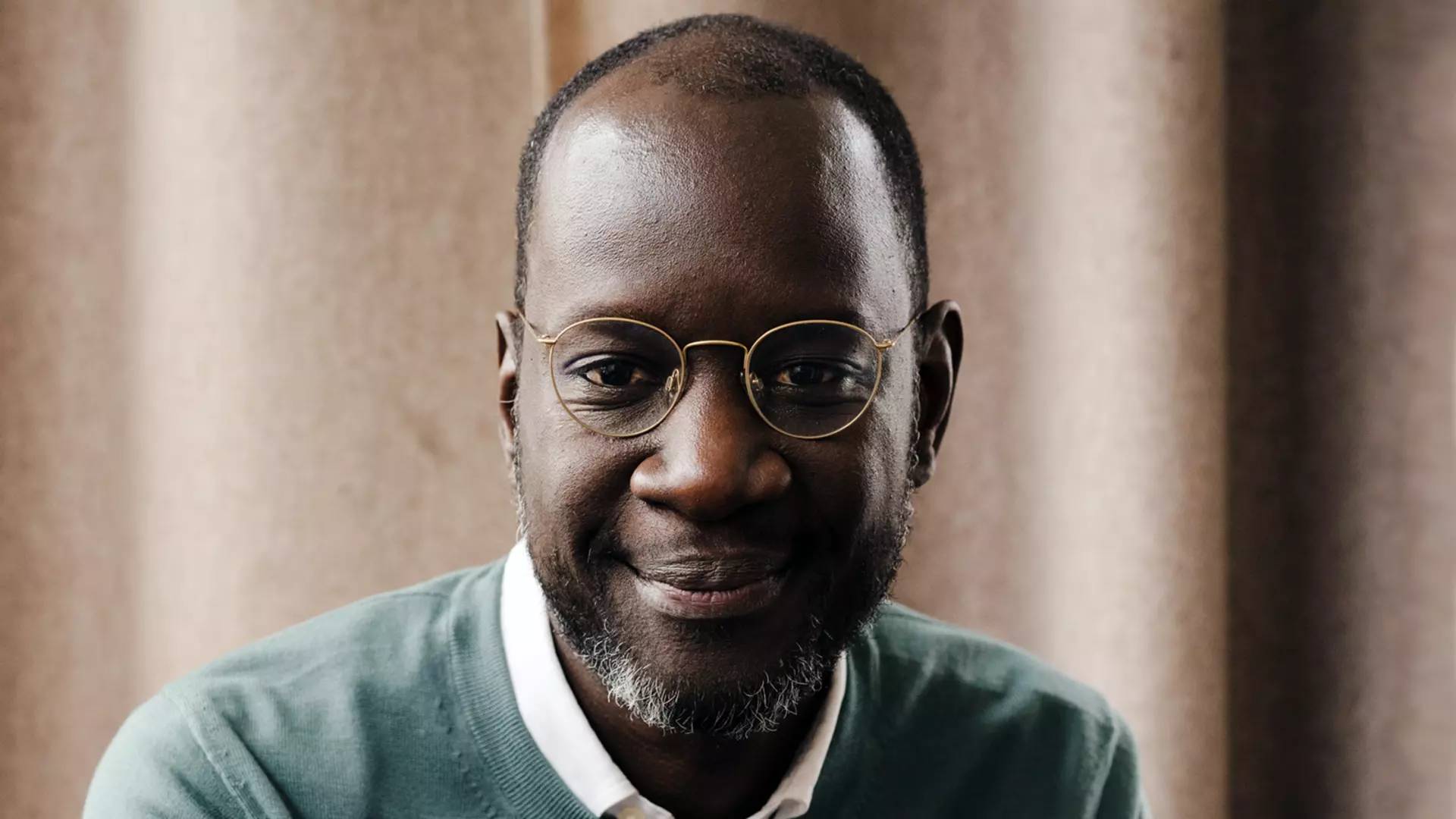
“Joy” is the title of a new project by btb, a Penguin Random House publishing imprint. The publisher has launched an open call inviting authors to submit short stories. Selected previously unpublished texts will be published in spring 2027 in the anthology “Joy.” The volume will be edited by the project’s initiator, BMG colleague Pierrot Raschdorff, Senior Director, Global Corporate Responsibility. Together with the publisher, he is looking for a total of twelve texts that, according to btb, “engage with a challenging present while also opening up a perspective of hope, connection, or support.” In addition to Pierrot Raschdorff himself, Betiel Berhe, Lamin Leroy Gibba, Kristof Magnusson, Mirrianne Mahn, Melanie Raabe, Chantal-Fleur Sandjon, Yasmin Shakarami, and James Sullivan have already confirmed their participation. In this interview, Pierrot talks about the “Joy” project.
Pierrot, how did the idea for “Joy” come about?
Pierrot Raschdorff: “Joy” grew out of a very specific moment – the sense that the social climate in Germany, and globally, has become noticeably harsher. At the beginning of 2025, I realized that I was no longer consuming the news in a purely rational way. It started to feel personal. I saw how exclusion, hostility, and dehumanizing language were becoming increasingly normalized – in everyday conversations, on social media, as well as in political debates and decisions. As a father, that immediately raised questions many people will recognize: What kind of world will my daughter grow up in? What values will surround her? “Joy” is my response to that. It’s a literary counterproposal that understands hope as an active choice – something you decide on and shape, even in the face of reality.
How can literature convey connection and hope at a time of growing social division?
Pierrot Raschdorff: Literature can’t simply write division away. But it can make people visible again – and that, to me, is already political. I think we all believe that literature has the power to move people, to shape them, and to give them strength. Most of us can probably name at least one book that helped us through a difficult moment or left a lasting impression. Literature can support us on many levels, especially in fast-moving times like these. It invites us to reflect, to pause, and sometimes simply to switch off – to step out of the constant cycle of bad news. And it’s not just about the book itself. It’s also about the act of reading: taking time, engaging with something deeply, and opening yourself up to another person’s thoughts, images, and words.
How did the selection of authors come together?
Pierrot Raschdorff: Some time ago, I founded a network of Black German authors. During a wonderful weekend trip to the Salzburg region, I shared the idea for “Joy” with a few writers while we were out walking in the woods. Several of them – including Melanie Raabe, Chantal-Fleur Sandjon, and Betiel Berhe – were immediately enthusiastic and decided to join the project. That was essentially the moment “Joy” was born. What matters to me is inviting voices that reflect the diversity of life in this country. At the same time, this open call is open to everyone. It was also important to me that “Joy” be cross-genre – bringing together different tones, forms, and narrative worlds.
You are also awarding a “wild card” as part of the project. Why was that important to you?
Pierrot Raschdorff: Because literary visibility still depends very much on who has access – and who doesn’t. Talent alone is often not enough. You also need time, a certain level of stability, contacts, and an understanding of how the industry works. Many outstanding voices don’t fail because of a lack of quality, but because of structural barriers. That’s why the wild card isn’t a “nice extra.” It’s a central part of “Joy.” We are deliberately opening the door to new voices – beyond reach, scene affiliation, or the usual milieus. We’re looking for texts that are strong in literary terms and dare to do something of their own. “Joy” shouldn’t just talk about hope. It should make it tangible.
One final personal question: What gives you the strongest sense of hope?
Pierrot Raschdorff: For me, hope emerges wherever people take each other seriously and create something together. Working with so many different authors is a real counterweight to the constant crisis narrative. It shows that connection is possible, even when the world feels loud and harsh. Taking moments to step away from bad news and surround yourself with inspiring, positive people really helps – and, of course, turning off your phone a bit more often.